Sunday, February 24, 2013

Beef Pilau, Skuma Wiki (sauted kale or collard greens) & Kachumbari (East African salsa ) meal


In Kenya, if someone asks you, "When are you inviting me over for some pilau?" That means there is some special occasion in the air. The birth of a child, a wedding, Ramadhan (Islamic religious holiday) or any other important get together. Pilau is a rice dish that consists of rice flavored with spices and cooked in stock, to which meat, poultry, hard-boiled eggs or fish may be added. It is a popular dish in Kenya (especially around the Kenyan coast) and Tanzania. Pilau exists in other cultures and countries as well. The spices used and the names it is given may differ, but the cooking concept is similar to the Kenyan Pilau. Today, I will do something different. I will give you the recipe for a complete meal. Besides the beef pilau, I will show you how to cook "Skuma Wiki". Skuma wiki traditionally, is cooked with kale. However, one can use collard greens (which is what I did here. I also added some spinach just for extra flavor). Translated literally from Swahili, skuma wiki means "to push the week", implying that it is a staple used to stretch the family budget as far as meals go, to last the week. This is because the vegetable is easily available and is affordable. The other recipe I will be sharing with you today is "kachumbari". Kachumbari is a fresh tomato and onion salad dish in East and Southern African cuisine. In Kenya, it is used as a condiment to a main meal. It is an uncooked salad dish consisting of chopped tomatoes, onions, and chili peppers, cilantro, lemon juice (and salt to taste). Variations of Kachumbari can be found in Kenya, Tanzania, Rwanda, Uganda and in central African countries of Malawi and Congo. In Latin America, it is a variation of pico de gallo or salsa frescaIt is popular throughout east Africa and parts of Southern Africa. The Swahili word "Kachumbari" originated from the word Koshumbri or "Kachumber" in Sanskrit from India.

SERVING SIZE: This meal feeds 6-8 sufficiently.

SPECIAL EQUIPMENT:
-Cutting board.
-Sharp Knife.
-2 large pots with lids.
-1 medium size pot with a lid.
-Cooking spoons.
-One large oven-safe dish.
-Aluminium foil.
-Big sifter or fine-mesh colander.
-medium mixing bowl, placed under the colander or sifter.


INGREDIENTS FOR THE PILAU:
-1 1/2- 2 lbs beef, trimmed and cut into 1 inch cubes (I used bone-in shanks, cross-cut. The bones add more flavor).
-1 tablespoon ginger-garlic paste.
-1 tablespoon salt (I use kosher salt).
-3 cups of basmati rice (washed several times until the water runs clear, and soaked for 30 minutes).
-2 medium sized red onions, thinly sliced.
-1/2 cup vegetable oil (I used canola oil).
-2 tablespoons tomato paste.
-1 cinnamon stick, broken into 3 smaller pieces.
-4 green cardamom pods.
-1 teaspoon coriander seeds.
-1 tablespoon cumin seeds.
-4 whole cloves.
-5 peppercorns.
-1/2 cup frozen green peas.
-2 medium-sized potatoes cut in two or there parts.


INSTRUCTIONS FOR COOKING THE PILAU:
-In the medium-sized pot, on medium heat, bring the beef, 2 cups of water, salt and ginger-garlic paste to a slow boil. Let it cook, covered, for 10-15 minutes.
     
                                                      
-Using the colander or sifter, drain the beef stock from the beef. Reserve the beef stock and set aside. Leave the beef pieces in the pot and set aside.
-In one of the large pots, on medium heat, heat the oil. Add the onions and saute until light brown. 
-Add all the whole spices to the pot and stir. Let it cook for at least 5 minutes until the spices release their aromas.
-Add the potatoes and fry them until they're crispy around the edges, but not completely cooked. Cover the pot and let it simmer for around 5 mins (uncover the pot to stir occasionally within that time).                                                   
-Add the tomato paste to the pot and stir to make sure all the potatoes are well coated in the spice/tomato paste mix.
-Add the beef into the pot with the potatoes and stir.
-Add the reserved beef stock into the pot and stir.
-Add the peas into the pot.
-Once the beef stock has come to a boil, drain the soaked rice and gently put it into the pot. Gently fold the rice into the mixture and make sure that all the rice is covered by the broth.
-Reduce heat to medium-low, cover the pot and let it simmer for 20-25 minutes.

***PREHEAT YOUR OVEN TO 350 DEGREES FARENHIGHT ***

-The rice is done when you press it between your thumb and finger and it mashes easily. When the rice is ready, turn the heat off. If there is excess broth in the pot even after the rice is ready, use a fine-mesh colander or sieve to drain off the excess liquid.
-Transfer your rice into an oven-safe dish and cover it with aluminium foil. Let it cook covered for 15 minutes on the middle rack of the oven. After 15 minutes, uncover the rice and let it cook for an additional 15 minutes.
-Your rice is ready to be served. If you are still preparing other side dishes, then after the oven cools down, turn it on "warm" mode and return your rice into the oven until you are ready to serve it.

INGREDIENTS FOR SKUMA WIKI:
-1 big bunch of kale, well cleaned, stalk removed and chiffonaded (cut into fine, ribbons-like strips. Please see instructions in the video). Alternatively, you can use collard greens instead of kale. In our home in Kenya, we combine collard greens and spinach (which is what I did here). If you decide to use spinach in this recipe, you will need 1 big bunch, also chiffonaded, and mixed in with the cut collards.
-1 can peeled, diced, tomatoes (I used a 14.5 Oz can).
-2 tablespoons vegetable oil (I use canola).
-1 medium-sized red onion, finely cut.
-1/2 teaspoon turmeric powder.
-1 tablespoon salt (i use kosher).
-1/2 teaspoon red chili powder.
-1/2 of a big bouillon cube, or one whole small one (You can use either Maggie or Knorr cubes. These can be found in the Hispanic section of the International aisle at the grocery store).


INSTRUCTIONS FOR COOKING THE SKUMA WIKI:
-In a large pot, on medium heat, heat up the oil.
-Once the oil is hot, add the onions and saute until they start turning brown (do not let them burn, or it will affect the taste of the vegetables).
-Add the tomatoes and stir. Cover the pot and let the tomatoes cook down until they are soft.
-Add the salt and stir.

-Crumble the bullion cube into the pot and stir.
-Add the chili powder and stir.
-Add the chopped greens into the pot and allow it to cook for 5 minutes. After 5 minutes, stir the greens, lower the heat to medium-low and let it cook, uncovered, for 20-25 minutes until the greens are nice and tender. if you cover the greens at this point, they will turn brown :(. Do not add any water as the greens have moisture of their own, with which they'll cook.


While your skuma wiki is still cooking, you can now start on the Kachumbari.

INGREDIENTS FOR THE KACHUMBARI:
-3 medium-sized ripe tomatoes (I used vine tomatoes), cleaned and cubed into 1/2 inch cubes.
-1 medium red onion, finely sliced.
-1 jalapeno pepper (or any green pepper of your choice), cubed.
-1/4 cup finely cut cilantro (coriander leaves).
-Juice of 1/2 a lemon.
-1 teaspoon salt.


INSTRUCTIONS FOR MAKING THE KACHUMBARI:
-In a small mixing bowl, combine the onions and tomatoes.
-Use a fork to lightly mash the tomatoes to release their juices.
-Add the green pepper and stir.
-Add the cilantro and stir well.
-Add the lemon juice and stir well.
-Add the salt and stir well.
Your kachumbari is done. Now how easy was that? :)


You now have a complete meal. Carbohydrates (rice), Vitamins (greens) and Proteins (beef). I served my pilau up "family style", like we do in Kenya. This was so much food, I shared some with my neighbors. They were very happy! Enjoy!


Tuesday, February 19, 2013

Mango Cobbler


My homeland Kenya, straddles the Equator. That being said, the weather is very tropical and warm most year round. That means we have fruit trees producing most throughout the year. Of all the various fruits found in Kenya, my favorite has to be the mango. It's sweet, succulent flesh had satisfied my sweet tooth for many years growing up and still does to this day. My poor hubby once had to go to the grocery store at midnight when I was pregnant with our first child to find me a mango because that's what I was craving. He drove to three different stores before he found one. The pregnancy hormones wanted demanded mangoes and by God we were going to eat them no matter what! Lol! From that day on, hubby makes sure to grab mangoes whenever he sees them at the grocery store in case any kind of mango cravings strike again at an ungodly hour.

I feel like the mango does not get as much attention as it deserves here in my adopted home (U.S). The only time I see anyone using mango to make anything is in a mango salsa (to my Kenyan readers, salsa is the Latin equivalent of "Kachumbari"), or maybe a smoothie. So I had an epiphany two weeks ago and wondered to myself how it would turn out if I used the mango to make one of my favorite American desserts-a cobbler. That light bulb was lit in my head and there would be no rest until I made the mango cobbler. I'm so glad I did because it was delicious! The beautiful aroma filled the house and had me camped out beside the oven for the hour it was cooking. Talk about comfort food! Eating this was as comforting as getting a mother's hug..only from inside your stomach. I know it sounds strange, but that's the best way I can describe it. The texture of this dessert was perfect-soft, but not soggy. It was sweet, but not cloyingly so. Here's the recipe..

SERVING SIZE: Feeds 4-6 sufficiently.

EQUIPMENT:
-Sharp knife.
-Cutting board.
-medium mixing bowl.
-Oven-safe baking dish (I used a rectangular 9x13 inch baking dish).
-Whisk.
-Small saucepan.

INGREDIENTS:
-2 large ripe mangoes (look in the produce section of the grocery store).
-1 stick (8 tablespoons) of unsalted butter.
-1 cup self-raising flour (not all-purpose flour!).
-1 cup milk.
-3/4 cup- 1 cup granulated sugar, depending on how sweet you like your desserts (i used 3/4 cup).
-1 teaspoon pure vanilla extract.
-1/2 teaspoon ground cardamom (optional).
-1/4 cup mango nectar (look in the Hispanic section of international aisle at the grocery store).
-1/4 teaspoon salt (to balance the flavors).


***PRE-HEAT YOUR OVEN TO 350 DEGREES FAHRENHEIT ***

INSTRUCTIONS:
-Clean your mangoes, peel them and cut the fleshy part into wedges as shown in the picture below. Set aside.


-In a small saucepan, melt the butter. When done, pour the melted butter into the baking dish. Alternatively, you can place the butter directly in the baking dish, place the baking dish in the oven to melt the butter. Once ,melted, remove the dish from the oven and set aside.
-In the mixing bowl, combine the self-raising flour, sugar, cardamom and salt. Whisk together well.

                                                        
-Slowly add the vanilla extract and milk. Whisk as you add.
-Add the mango nectar and mix well. I used the mango nectar to give the bread part of the cobbler a the mango flavor. There should be no lumps in the batter.
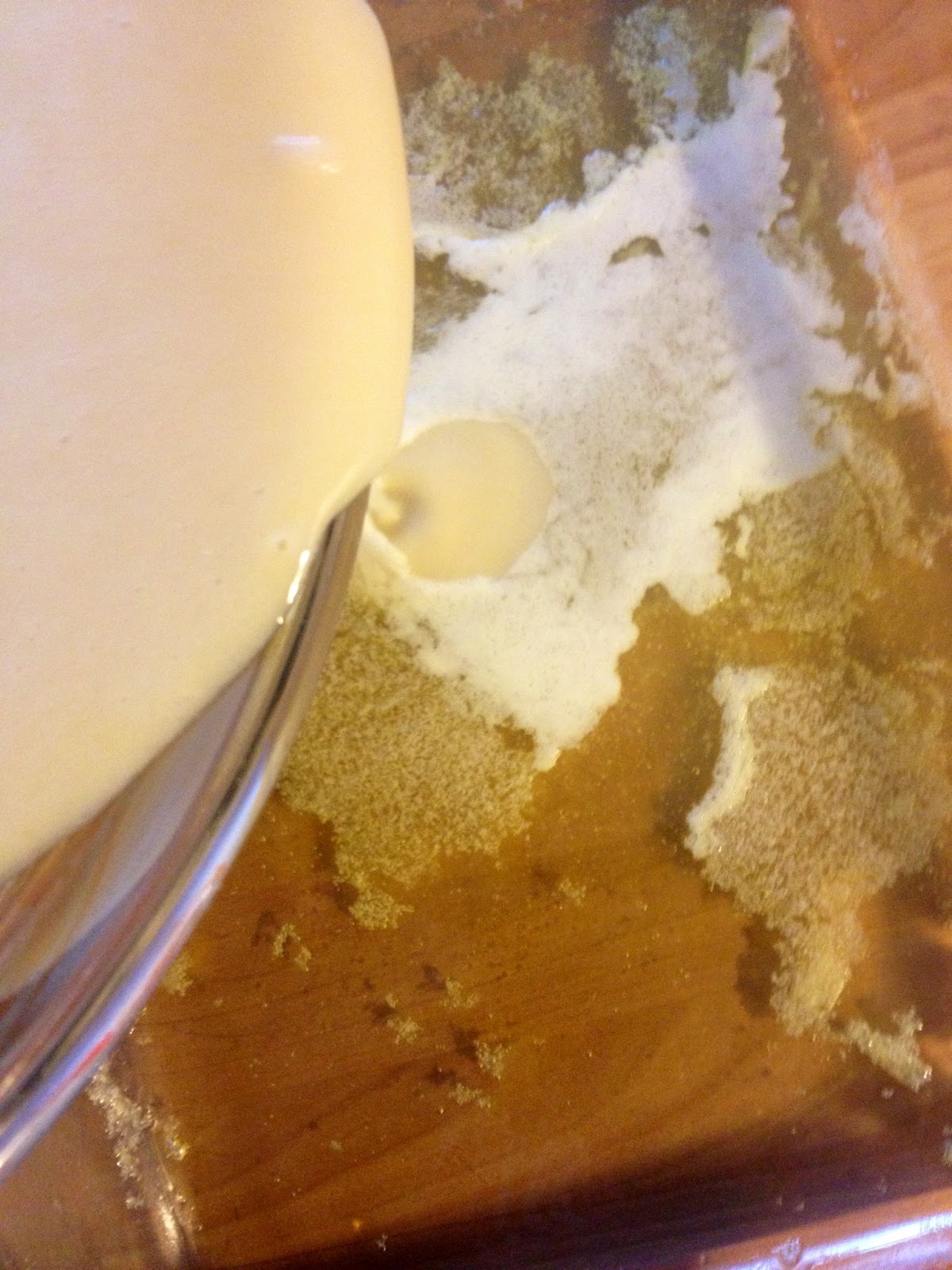
-Slowly pour the batter over the butter in the baking dish as shown in the picture.

                                                     
-Now in a single layer, arrange the mango wedges, making sure that there are no gaps as shown below (you want to have a mango in every bite).

                                                      
-Place your baking pan in the center rack of the oven and let it bake for 1 hour. It is ready when the edges start to pull from the baking dish and the crust looks golden brown.


-Let it cool for 8-10 minutes before serving as it will be very hot.

Your cobbler is now ready to enjoy. I served mine with some whipped cream as shown below. 


Eating this brought back such memories of my home country! The song below in Swahili by one of my favorite Tanzanian artists, just completed the experience. I hope this dish transports you to a magical place as it did me. This cobbler was "Safi!" (excellent, neat, on point!).


Tuesday, February 12, 2013

Hasselback Baked Potatoes


As I've mentioned before, I have a hubby whose a steak and potatoes kind of guy. It therefore goes without saying that I cook steak and potatoes a lot. Actually at least once a week. I had exhausted the different ways of cooking this meal. Not so much the beef part, but the accompanying potatoes. The potato part of the meal needed a serious makeover. The kind of makeover that would warrant a second take on the plate. You know-a paparazzi-worthy makeover. I looked through an old cook book that I hadn't touched in years and ran into this recipe. Ladies and gentlemen, I introduce to you the Hasselback baked potato. 

                                                   
This is not your hum-drum potato. Go ahead-I'll wait as you take in her beauty. Her golden crusted top, ridged back and deep crevices make her something of an enigma. She would give any potato a serious complex. If she were a celebrity, she would be the Beyonce of potatoes. The Hasselback potato (also known as the accordion potatoes) was named after the Stockholm restaurant that first introduced them. If I told you that you could turn any potato in your kitchen into this beauty, you may find it hard to believe. But trust me, it can be done. Here's how.

SERVING SIZE: Feeds 4 sufficiently.

EQUIPMENT:
-Cutting board.
-Sharp knife.
-2 spatulas or 2 cooking spoons of the same size.
-Baking sheet or 9x13 baking pan.
-Vegetable peeler.
-Paper towel or clean kitchen cloth.
-Pastry brush for applying the seasoned oil.
-Small mixing bowl.


INGREDIENTS:
-1/4 cup olive oil.

-2 tablespoons fresh lemon juice.

-1 teaspoon salt  and 1/4 teaspoon for sprinkling over potatoes (I use kosher salt).
-1 tablespoon finely chopped cilantro (coriander leaves).
-1 teaspoon dry rosemary.
-1/4 teaspoon red chili pepper.
-1/2 teaspoon ground black pepper.
-1/4 teaspoon cumin seeds (I used black cumin seeds).
-zest of one lemon.
-1/2 teaspoon of basil.
-1/2 teaspoon of thyme.
-1/2 teaspoon herbs De Provence (optional).
-1/2 teaspoon all-purpose seasoning.


**PREHEAT YOUR OVEN TO 425 DEGREES FAHRENHEIT**

INSTRUCTIONS:
-In a small mixing bowl, combine the oil, lemon juice, 1 teaspoon of salt, chili powder, lemon zest and herbs. Mix well with a fork.

                                                     
-Using the peeler or a knife, peel the potatoes, wash and dry them with a paper towel or clean kitchen cloth.
-Flatten one end of the potato (that will prevent it from rolling around as you cut it.

                                                      
-On your cutting board, place your two spatulas or cooking spoons as shown below. 
-Place your peeled potato (flat side down) between the two spatulas/ spoons as shown below.
-Use your knife to cut thin slices (about 1/4 inch apart from each other) across the back of the potato (the part facing up), but do not cut all the way through. The spoons/spatulas that you've placed on either side of the potato should prevent the knife from cutting all the way through the potato.

                                                     
-Dip your pastry brush in the seasoned oil and apply it all over the surface of the potato (the bottom too). Squeeze the sides of the potato and that will widen the slices on the potato, enabling the seasoned oil to get into the crevices (you want the potato to be well seasoned, even in the crevices). Repeat this on all the potatoes.

                                                     
-Once you're done brushing the potatoes with the seasoned oil, sprinkle the 1/4 teaspoon of salt on the surfaces of all the potatoes.
-Place the potatoes in your baking sheet or baking pan leaving spaces between them to allow them to properly cook.
-Place in the middle rack of the oven for 45mins-1 hr. Check back occasionally to make sure that the potato is cooked all the way through.

Your potato should now be done. I served mine up with some beef curry and peanut creamed spinach. The combination was delectable! The presentation impressive. Now that's what we call a win-win situation :-)


-